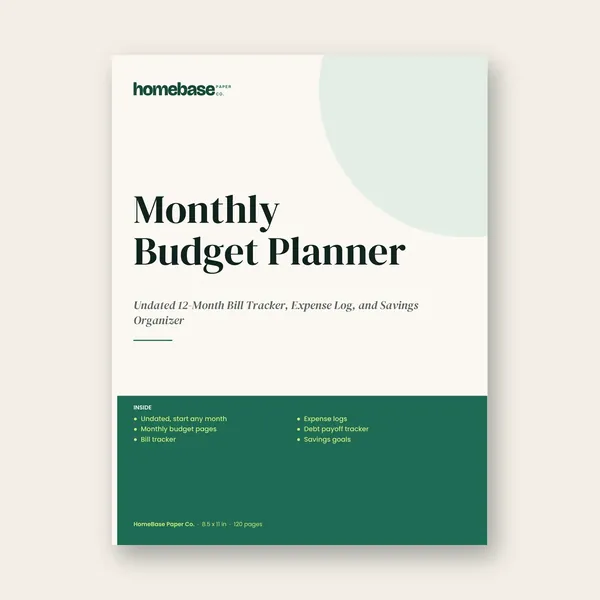
A printable budget planner is better if writing things down helps you notice and remember your spending, and if you budget alone at the kitchen table. A budget spreadsheet is better if you want automatic totals, categories that add up themselves and a budget two people can update from their phones. Many households end up using both: a spreadsheet for the math and a paper page for the plan they look at every day.
Here's how they compare in practice.
The comparison at a glance
| Printable planner | Spreadsheet | |
|---|---|---|
| Setup time | Minutes: print and start | 15 to 30 minutes the first time |
| Math | By hand (calculator) | Automatic |
| Mistakes | Arithmetic slips are common | Formulas don't slip, but typos do |
| Motivation | Writing creates awareness | Charts and alerts show progress |
| Sharing with a partner | One copy, in one place | Both can edit from any device |
| Works offline | Always | Excel yes; Google Sheets needs a connection to sync |
| Year-end summary | Copy totals by hand | Built in |
| Cost of mistakes | Rewrite the page | Undo |
| Best for | Visual, hands-on planners | Detail lovers and couples |
Where paper wins
Writing each expense by hand slows you down just enough to notice it. People who've tried apps and spreadsheets and drifted away often find a paper budget is the one they keep using, because it's visible on the fridge or desk rather than hidden in a file. Paper also suits cash budgeting and sinking funds tracked in envelopes, since the habit is physical anyway.
The downsides are real, though: the math is yours to do, mistakes compound, and a year of pages doesn't summarize itself.
Where spreadsheets win
A spreadsheet does the arithmetic for you, so the totals are always current. Good templates go further: over-budget categories turn red, a "left to budget" counter shows when every dollar has a job, and a dashboard charts the whole year. Couples benefit most, because both people can log purchases from their phones in Google Sheets without waiting to get home.
The downside is that a spreadsheet is easy to forget. Without a habit, the file sits untouched for weeks.
How to choose
- Choose paper if you've abandoned digital tools before, prefer seeing the plan every day, or mostly use cash.
- Choose a spreadsheet if you budget with a partner, want accurate year totals, or track many categories.
- Choose both if you like the awareness of writing but want the math done for you: plan the month on paper, then enter totals in the spreadsheet once a week.
The combined system, step by step
- On the first of the month, write the plan on a printable monthly budget page: income, bills, categories and savings.
- During the month, log purchases in the spreadsheet (or collect receipts and enter them weekly).
- Every Sunday, copy the spreadsheet's category totals onto the paper page.
- At month end, review both. The paper page shows the story; the spreadsheet holds the history.
A note on budgeting as a couple
Money talks go better when both people can see the same numbers. With a spreadsheet, share the file so either of you can add a purchase the moment it happens; then the Sunday review is about choices, not reconstruction. With paper, keep the planner in a shared spot and agree who updates it. Either way, set a short monthly meeting on the calendar. Fifteen minutes to look at what went well, what ran over and what's coming next month prevents most money arguments, because nothing comes as a surprise. If one partner loves spreadsheets and the other prefers paper, the combined system lets each person use the format they like.
What we make for each approach
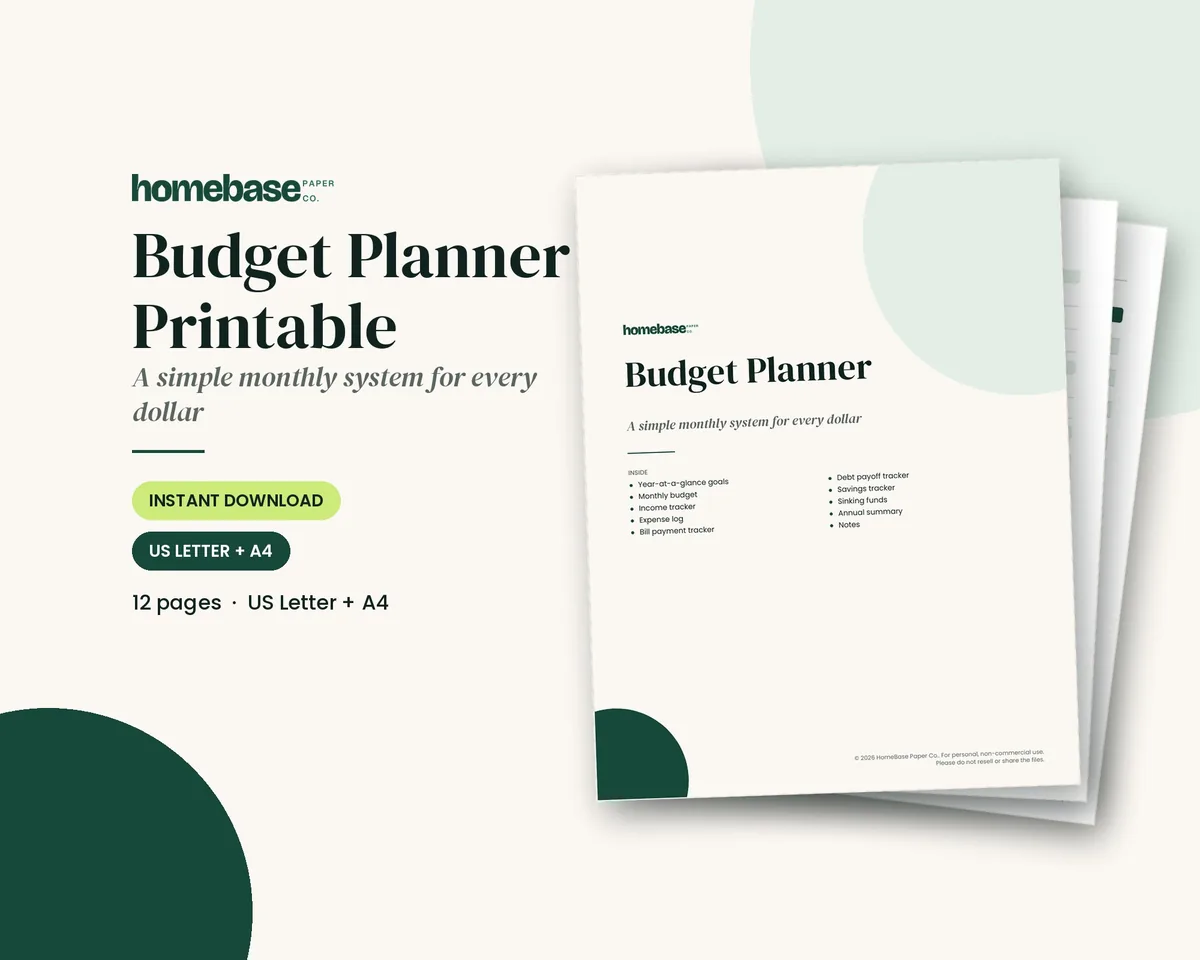
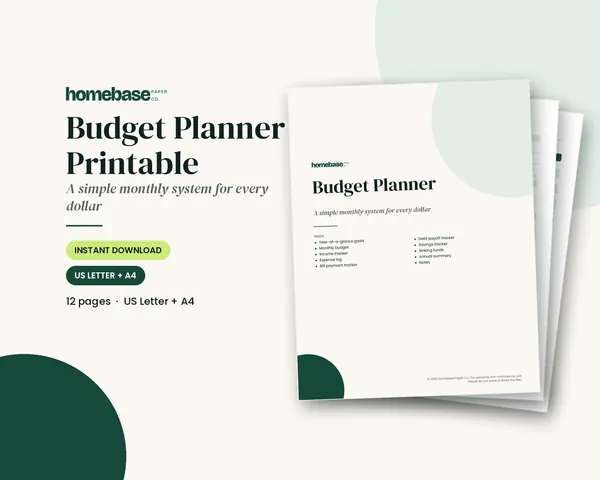
For paper: the Budget Planner Printable ($5.99) is 12 undated pages in US Letter and A4: money goals, monthly budget, income tracker, expense log, bill payment tracker, debt payoff tracker, savings tracker, sinking funds, annual summary and notes. Print a set every month. For a bound version, the Monthly Budget Planner paperback ($10.99, 120 pages, undated) has a calendar, monthly budget with 20 expense categories, bill tracker and four expense log pages for each month, printed and shipped by Amazon.
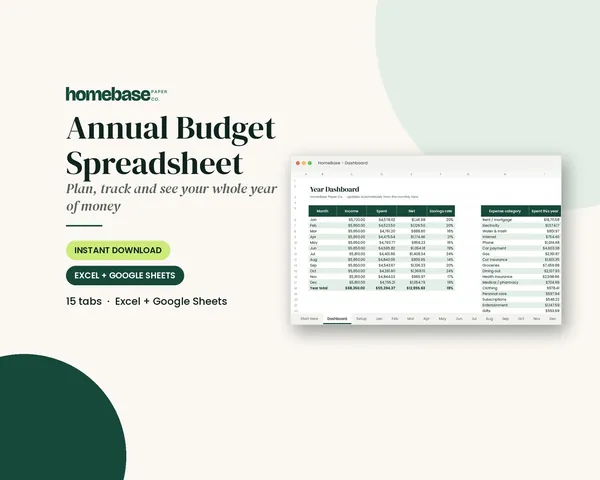
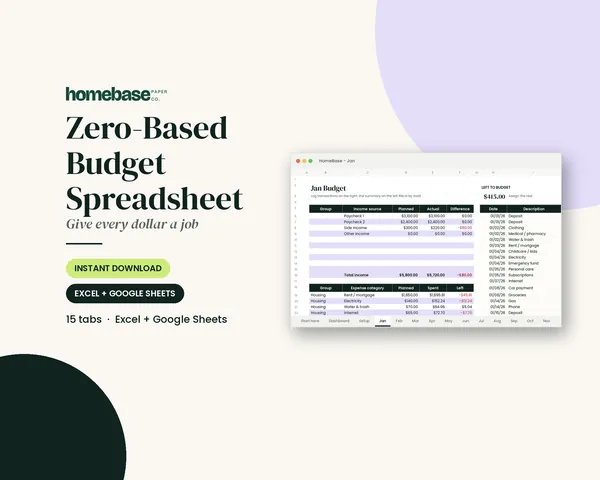
For spreadsheets: the Annual Budget Spreadsheet ($6.99) has 12 monthly tabs, a transaction log with category dropdowns, planned vs. actual by category, over-budget alerts in red and a year dashboard. If you use zero-based budgeting, the Zero-Based Budget Spreadsheet ($6.99) adds a "left to budget" counter that turns green when every dollar is assigned. Both work in Excel and Google Sheets.
For both: the Ultimate Budget Bundle ($19.99) includes all six of our budget spreadsheets plus the Budget Planner and Bill Tracker printables, which is exactly the combined system above.
Mistakes with either method
- Budgeting once and never reviewing. A weekly 15-minute check matters more than the tool.
- Too many categories. Start with 10 to 15 and split them later if needed.
- Forgetting irregular expenses like car registration and gifts. Add sinking funds for them.
- Switching tools every month. Give one method three full months before judging it.
New to budgeting entirely? Start with our budgeting for beginners guide.
Frequently asked questions
Is a paper budget or spreadsheet better?
Paper suits people who stay engaged by writing things down and seeing the plan every day. Spreadsheets suit people who want automatic totals, accurate year summaries and a budget two partners can update from any device. Many households combine them, planning on paper and tracking in a spreadsheet.
Can I use a budget spreadsheet on my phone?
Yes. Our budget spreadsheets are .xlsx files that work in Excel and in Google Sheets. The first setup is easiest on a computer, but after that you can log purchases and check totals from the Google Sheets or Excel app on a phone or tablet.
Are the printable budget pages dated?
No. The Budget Planner Printable has 12 undated pages you can print every month, and the Monthly Budget Planner paperback is also undated, so you fill in the month and year yourself and no pages go to waste if you start mid-year.
What is included in the Ultimate Budget Bundle?
It includes six spreadsheets, the Annual Budget, Zero-Based Budget, Paycheck Budget, Debt Payoff Planner, Bill Tracker and Sinking Funds Tracker, plus two printables, the Budget Planner and Bill Tracker. Spreadsheets work in Excel and Google Sheets; PDFs come in US Letter and A4.
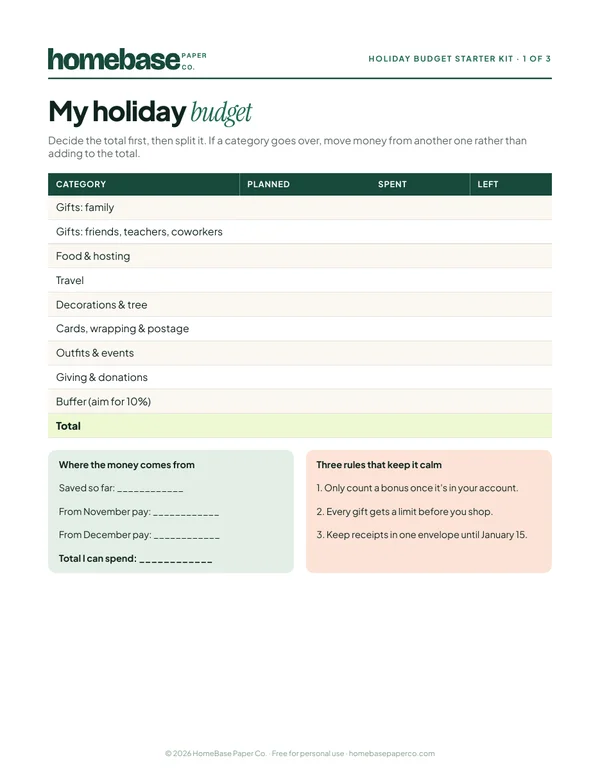
Free download
The Holiday Budget Starter Kit
A one-page holiday budget, a gift list with a spending limit for every person, and a 6-week countdown so December stays calm and paid for.
Free, no sign-up needed.