If you have never made a budget before, the word itself can feel heavy, like a diet for your wallet. It doesn't have to be. A budget is simply a plan for the money you expect to have, written down before the month starts so you are making decisions on purpose instead of by accident.
This guide walks you through making your very first budget in one sitting. You don't need special software, a finance degree, or a perfect month of spending to start. You need your recent bank statements, about an hour, and a willingness to be a little imperfect.
Why a written budget helps
Most people already have a rough sense of what they earn and what their rent or mortgage costs. The trouble is the middle: groceries, gas, takeout, subscriptions, kids' activities, and the dozens of small purchases that don't feel like much individually. A written plan makes that middle visible.
The Consumer Financial Protection Bureau's free budgeting guide frames it the same way: know what's coming in, know what's going out, and make a plan for the gap. Their Your Money, Your Goals toolkit also has free worksheets if you want a second set of tools alongside ours.
A budget won't magically create more money, but it does three useful things:
- It shows you where your money actually goes, which is usually different from where you think it goes.
- It lets you choose priorities (paying down a card, building an emergency fund, a family trip) instead of having whatever is left over decide for you.
- It reduces money arguments, because the decisions are made together once a month instead of at the checkout line.
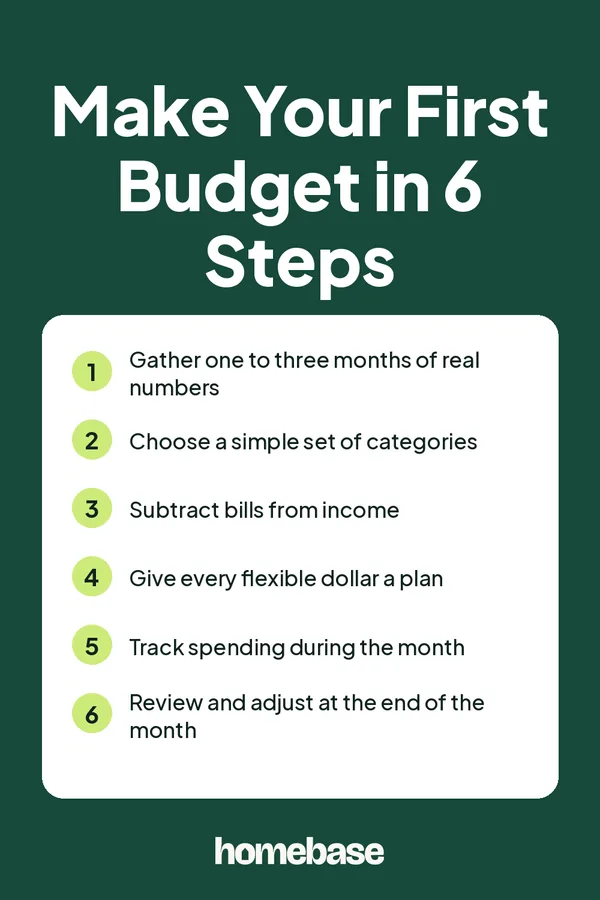
Step 1: Gather one to three months of real numbers
Before you plan anything, look backward. Pull up your checking account, credit card statements, and any payment apps you use. One month is enough to start; three months gives you a better average, especially for bills that change, like utilities.
Write down:
- Take-home pay for each person in the household (the amount that actually lands in the bank after taxes, insurance and retirement contributions).
- Other regular income, such as child support, a side hustle, or benefits.
- Every recurring bill: housing, utilities, phone, internet, insurance, car payment, minimum debt payments, subscriptions, childcare.
- Everything else, grouped roughly: groceries, dining out, gas, household supplies, kids, pets, gifts, personal care, entertainment.
Don't judge the numbers yet. You're taking an honest snapshot. If you find a subscription you forgot about, write it down and keep going; you'll make decisions in Step 4.
Step 2: Choose a simple set of categories
Beginners often make the mistake of creating 40 categories on day one. That's a recipe for quitting by week two. Start with around 10 to 15 categories you can remember without looking.
A good starter list:
| Category | What goes in it |
|---|---|
| Housing | Rent or mortgage, HOA, renters or home insurance |
| Utilities | Electric, gas, water, trash, internet, phone |
| Groceries | Food and basic household supplies from the grocery store |
| Transportation | Gas, car insurance, car payment, parking, transit |
| Debt payments | Minimum payments on cards and loans |
| Kids and pets | Childcare, school costs, activities, pet food, vet |
| Dining out | Restaurants, coffee shops, delivery |
| Personal and fun | Haircuts, hobbies, streaming, entertainment |
| Gifts and holidays | Birthdays, holidays, celebrations |
| Savings | Emergency fund and goals like a trip or a car |
| Irregular expenses | Car registration, annual subscriptions, back-to-school |
You can always split a category later. If "Groceries" keeps getting swamped by household items, give household items their own line next month.
Step 3: Subtract bills from income
Add up your monthly take-home income. Then subtract your fixed bills, the ones that cost the same, or close to it, every month. What's left is the money you get to plan on purpose for groceries, gas, fun, savings and debt.
If the number is negative, that is important information, not a failure. It means the plan needs to change: a bill to renegotiate, a subscription to cancel, a temporary spending freeze in a flexible category, or a conversation about income. Seeing it on paper is the first step to fixing it.
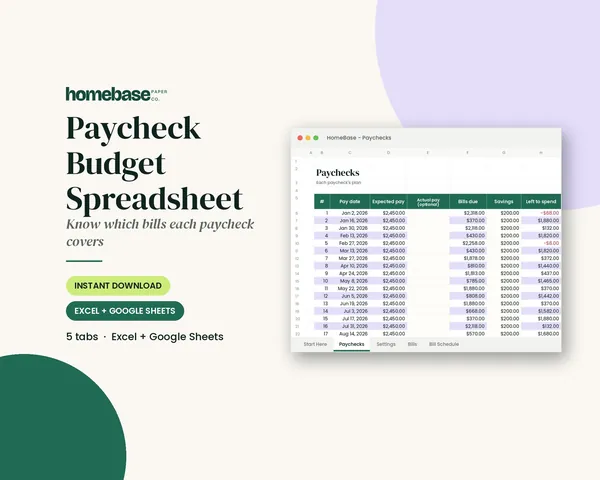
If you're paid every two weeks, it can help to budget per paycheck instead of per month, assigning specific bills to specific paychecks. Our Paycheck Budget Spreadsheet is built for exactly that.
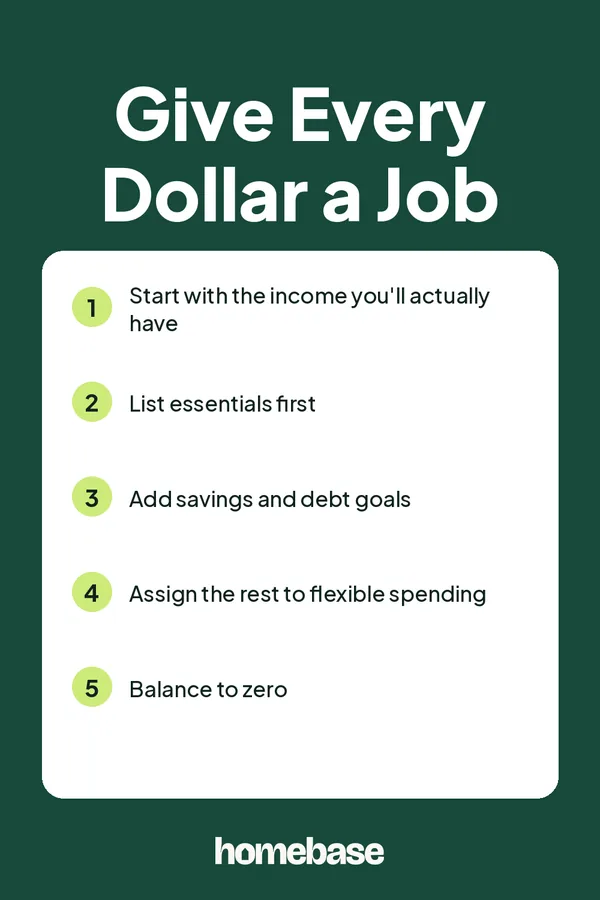
Step 4: Give every flexible dollar a plan
Now split what's left among your flexible categories. Use your Step 1 numbers as a starting point and adjust:
- If you spent $700 on groceries last month and that felt tight, plan for $700, not an aspirational $400.
- If dining out was higher than you'd like, lower it a realistic amount, say 20 percent, rather than to zero.
- Put something in savings, even if it's small. The CFPB's guide to building an emergency fund recommends starting with whatever amount you can do consistently and automating it.
One popular starting framework is the "50/30/20" rule: roughly half of take-home pay to needs, 30 percent to wants and 20 percent to savings and extra debt payments. It's a guideline, not a law. In many areas housing alone takes more than that, and that's fine; use it as a gut check, not a grade.
If you want every dollar assigned down to zero, read our guide to the zero-based budget, which is the next step up from this one.
Step 5: Track spending during the month
A budget you write and never look at again is a wish list. The magic happens when you compare the plan to what really happened. Pick one tracking method you'll actually use:
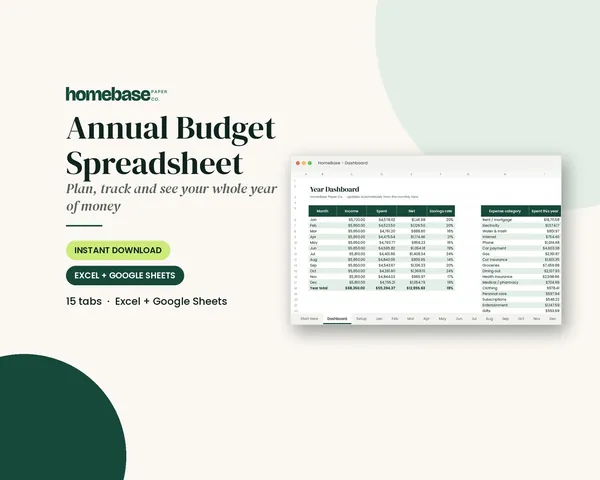
- Spreadsheet: enter transactions once or twice a week. Formulas do the math, and you can see over-budget categories at a glance. Our Annual Budget Spreadsheet works in both Excel and Google Sheets and flags over-budget categories automatically.
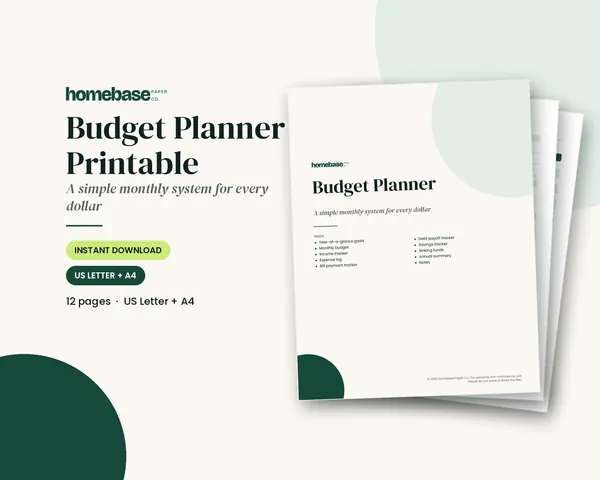
- Paper: some people remember better when they write by hand. A printable budget planner in a binder on the kitchen counter is hard to ignore. A 1-inch three-ring binder with clear view cover and a pack of colored sheet protectors will hold a full year.
- Envelopes: for categories you tend to overspend (often groceries or dining out), cash in labeled envelopes makes the limit physical.
Set a recurring 15-minute "money check-in" on your calendar each week. Sunday evening works well for many families.
Step 6: Review and adjust at the end of the month
Your first budget will be wrong. Everybody's is. That's not a sign budgeting doesn't work; it's how budgeting works. At the end of the month:
- Compare planned versus actual for each category.
- Ask why the biggest misses happened. Was it a one-time event (a birthday, a car repair) or a pattern?
- Adjust next month's plan. Raise categories that were unrealistic; lower ones where you had money left over.
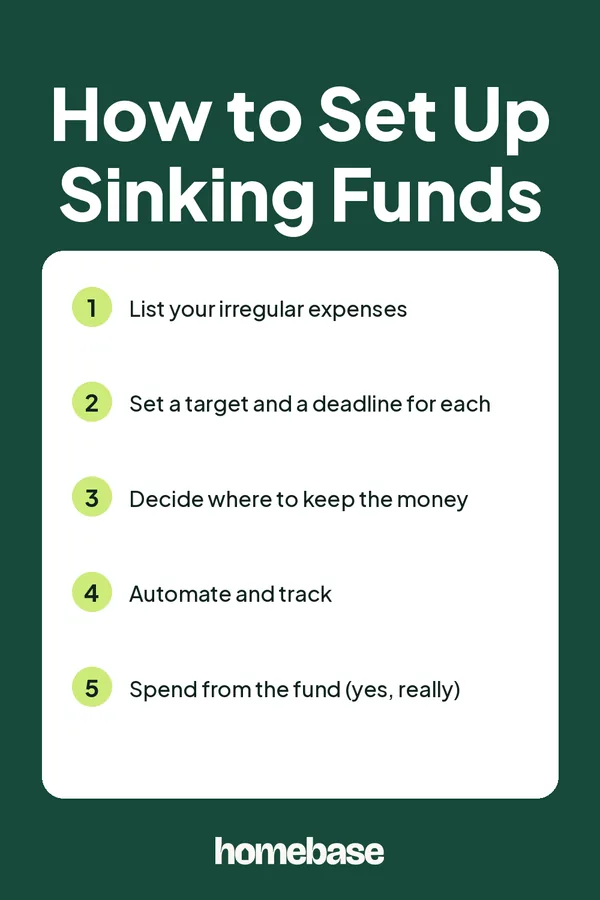
- Note expenses that surprised you. Those are candidates for sinking funds, small monthly savings for irregular bills.
By month three, most people find their numbers get much closer to reality.
Common beginner mistakes (and easy fixes)
Forgetting irregular expenses. Annual car registration, holiday gifts, school fees and that once-a-year membership renewal all show up eventually. Make a list of every irregular expense from last year, divide each by 12, and save that amount monthly.
Budgeting with gross pay. Always use take-home pay. Taxes and payroll deductions aren't spendable.
No "fun money." A budget with zero room for enjoyment is hard to keep. Give each adult a small personal amount that doesn't need to be explained.
Quitting after one bad week. Overspent on groceries? Move money from another category to cover it and keep going. Moving money around is allowed; that's what makes a budget flexible.
Doing it alone when you share finances. If you have a partner, make the budget together. A monthly "budget meeting" with snacks goes a long way.
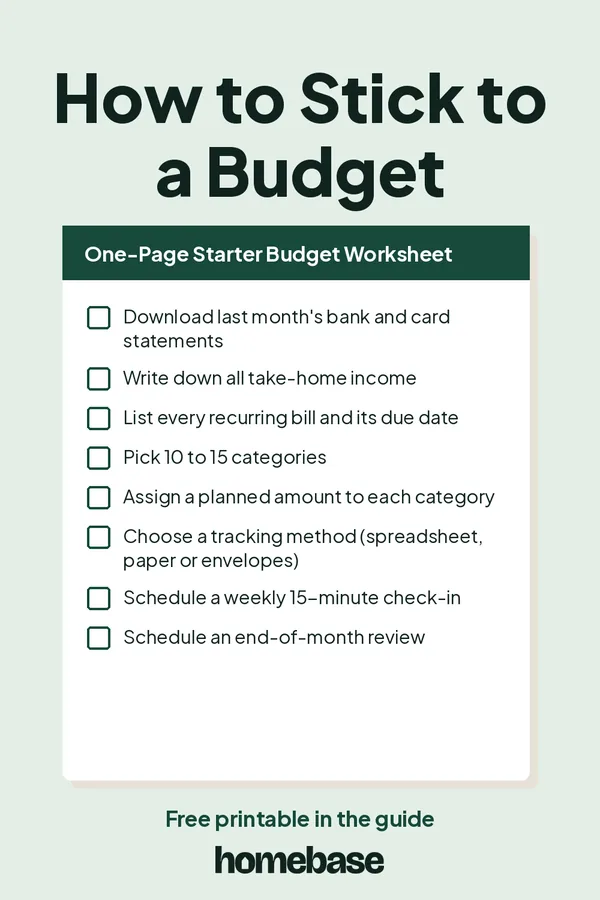
A simple first-month checklist
- Download last month's bank and card statements
- Write down all take-home income
- List every recurring bill and its due date
- Pick 10 to 15 categories
- Assign a planned amount to each category
- Choose a tracking method (spreadsheet, paper or envelopes)
- Schedule a weekly 15-minute check-in
- Schedule an end-of-month review
Where to go next
Once you've completed a couple of months, you can build on your budget:
- Assign every dollar with a zero-based budget.
- Stop irregular bills from wrecking your month with sinking funds.
- Choose a payoff plan with our debt snowball vs. avalanche guide.
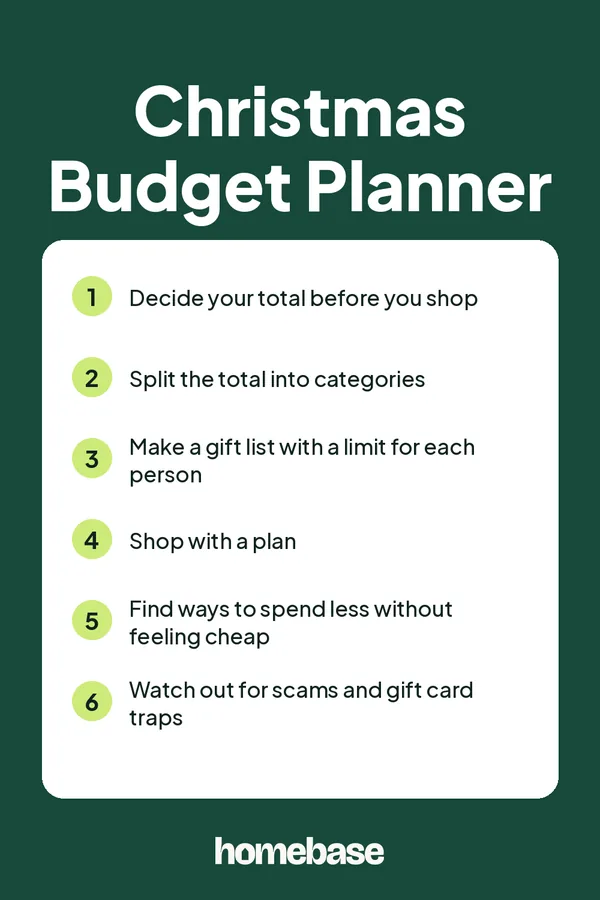
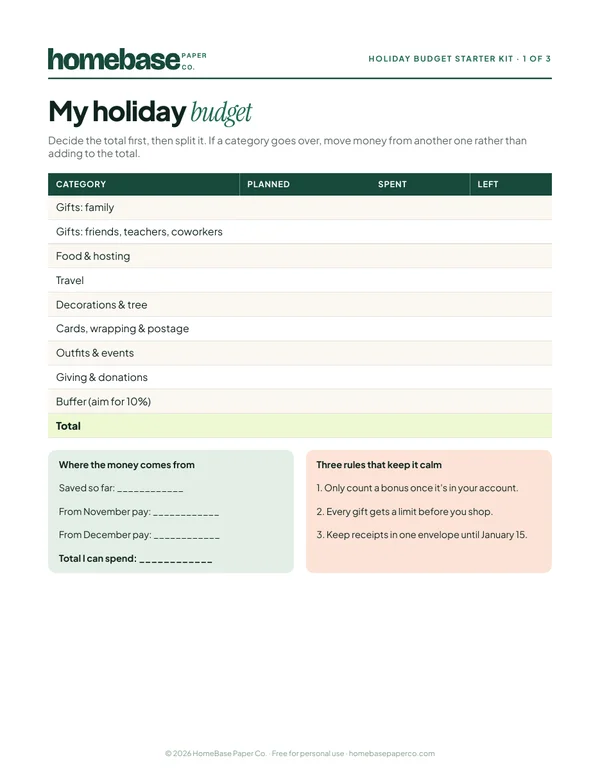
- Plan ahead for the most expensive month of the year with a holiday budget.
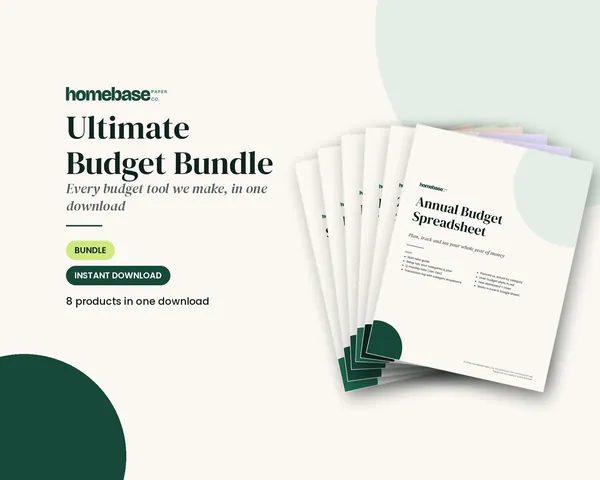
If you'd like everything in one place, the Ultimate Budget Bundle combines our budget, bill and savings tools in one download.
This article is general education, not personalized financial advice. If you're dealing with debt you can't keep up with, a nonprofit credit counselor can help you review options.
From our shop
Tools from our shop that go with this guide
Spreadsheets
Annual Budget Spreadsheet
See exactly where your money goes every month - without complicated software.
Printables
Budget Planner Printable
Twelve undated pages you can print every month: budget, bills, spending, savings and debt.
Spreadsheets
Paycheck Budget Spreadsheet
Enter your bills once. The sheet tells you which paycheck pays each one, all year.
 Save 57%
Bundles
Ultimate Budget Bundle
All 6 spreadsheets + both printable planners - for less than half the price of buying them separately.
Free download
The Holiday Budget Starter Kit
A one-page holiday budget, a gift list with a spending limit for every person, and a 6-week countdown so December stays calm and paid for.
Free, no sign-up needed.
Save this guide for later