Ever have a month where the budget was going fine, then the car needed new tires, two birthdays landed in the same week, and the annual insurance bill showed up? Those expenses weren't really emergencies. You knew they'd happen eventually. You just didn't know exactly when.
That's what sinking funds are for. A sinking fund is money you set aside a little at a time for a specific, expected expense, so when the bill arrives the money is already waiting.
Sinking funds vs. emergency funds
They're both savings, but they do different jobs:
- Emergency fund: for the truly unexpected and urgent, such as a job loss, a medical bill or a major repair you couldn't predict. The CFPB's emergency fund guide covers how to build one.
- Sinking funds: for expected costs with flexible or known timing, such as holidays, car maintenance, back-to-school, vacations, annual subscriptions and replacing a phone.
Keeping them separate protects your emergency fund. If you pay for Christmas out of your emergency fund every year, it's not really an emergency fund.
Why sinking funds work
The idea is simple math. A $600 expense in December feels like a crisis if you pay it all at once. Spread over 12 months, it's $50 a month, which most budgets can absorb.
There's also a mental benefit. When an expected expense arrives and the money is already set aside, it stops feeling like a setback. You pay it, and the rest of your budget stays intact. For many families, that's the moment budgeting starts to feel calm instead of stressful.
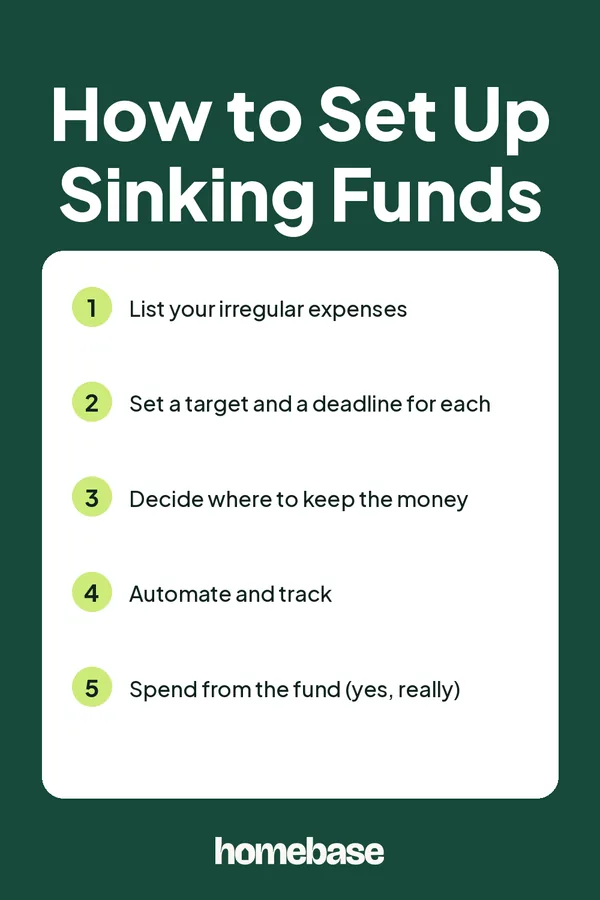
Step 1: List your irregular expenses
Look back through the last 12 months of bank and card statements and write down every expense that wasn't monthly. Common ones include:
Car
- Registration and inspection
- Oil changes, tires and brakes
- Insurance if paid every six or twelve months
Home
- Home or renters insurance (if not in escrow)
- Property taxes (if not in escrow)
- HVAC service, appliance repairs, lawn equipment
- Furniture and household replacements
Family and life
- Birthdays and holidays
- Back-to-school supplies and clothes
- Kids' sports fees and camps
- Annual subscriptions and memberships
- Vacations and travel
- Pet care: annual vet visit, vaccines, grooming
Health
- Dental and vision costs
- Deductibles and copays you know you'll meet
Personal
- Haircuts, clothing, gifts for weddings and showers
- Phone or laptop replacement
You probably won't fund all of these at once. That's fine. Start with the three to five that have hurt the most in the past.
Step 2: Set a target and a deadline for each
For each fund, decide:
- Target amount: How much will you need? Use last year's actual cost or a quote.
- Due date: When will you need it? Some have firm dates (registration), others are "sometime this year" (tires).
- Monthly amount: Target ÷ months until due.
Examples (illustrative only):
| Sinking fund | Target | Months away | Save per month |
|---|---|---|---|
| Holiday gifts | $600 | 12 | $50 |
| Car registration | $150 | 6 | $25 |
| Back-to-school | $300 | 10 | $30 |
| Annual vet visit | $240 | 8 | $30 |
| New tires | $700 | 14 | $50 |
If the total monthly amount is more than your budget can handle, prioritize by due date and importance. You can fund some fully and others partially, then add more as other goals finish.
Step 3: Decide where to keep the money
You have a few options:
- One savings account, tracked on paper or a spreadsheet. Simple, and the tracker tells you how much of the balance belongs to each fund.
- Multiple savings "buckets" or sub-accounts. Many banks and credit unions let you nickname several savings accounts or create goals inside one account. This makes it easy to see each fund at a glance.
- Cash envelopes. Good for small, frequent categories like gifts or haircuts. Less ideal for large amounts.
Whatever you choose, keep sinking fund money separate from your everyday checking so it doesn't get spent by accident. If it's in a savings account, look for a federally insured account; the FDIC and NCUA insure deposits at member banks and credit unions up to legal limits.
Step 4: Automate and track
Set up an automatic transfer from checking to savings on payday for the total monthly sinking fund amount. Then, once a month, update your tracker so each fund's balance is up to date.
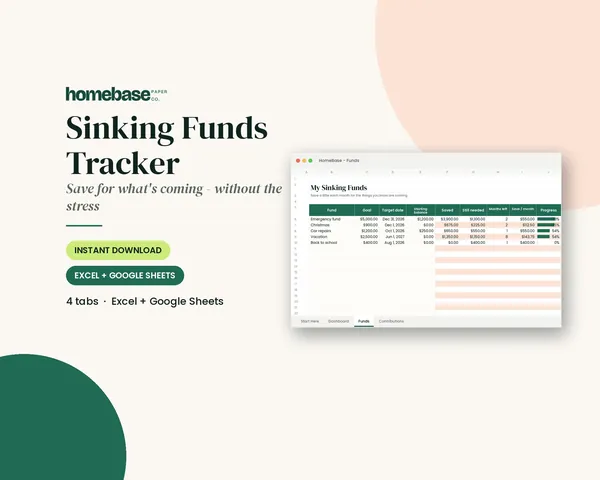
Our Sinking Funds Tracker Spreadsheet shows each goal's progress bar, the amount still needed, and the monthly amount required to hit your deadline. If you'd rather color in progress by hand, the free printable at the bottom of this page does the same thing on paper.
Step 5: Spend from the fund (yes, really)
This part trips people up. When the expense arrives, use the money. That's what it's for. Transfer from savings to checking, pay the bill, and update your tracker. There's no guilt in spending a sinking fund. It means the system worked.
If the expense costs more than you saved, cover the difference from your monthly budget or another lower-priority fund, then adjust your target for next time.
Making it fun: savings challenges
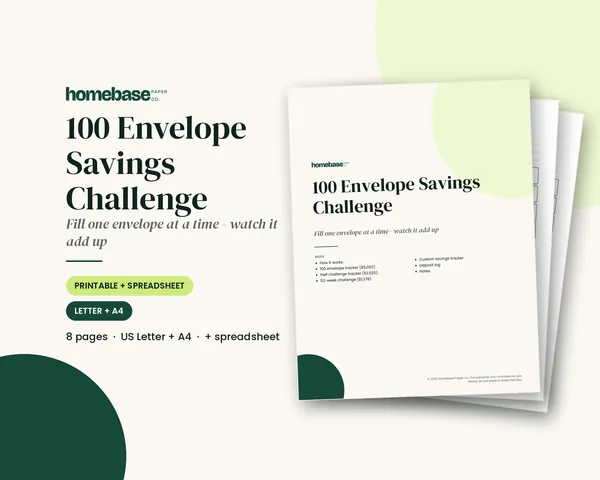
If you're just getting started or saving for a fun goal, a savings challenge can make it feel like a game. The popular "100 envelope challenge" has you number 100 envelopes and put in that many dollars when you pick one, which adds up to $5,050 if you finish all 100 (the sum of 1 through 100). You can scale it down by using half the envelopes or dividing amounts by two.
Our 100 Envelope Savings Challenge comes with a printable chart and a spreadsheet version that does the math. For cash envelopes, a set of reusable cash budget envelopes holds up better than paper ones.
Common sinking fund mistakes
Too many funds at once. Twenty funds at $10 each is hard to track and slow to grow. Start with a handful.
Forgetting to adjust. Prices change. Update targets once a year using actual costs.
Raiding funds for other things. If you need to borrow from one fund for another, write it down and pay it back. Better yet, add a small "miscellaneous" fund for surprises.
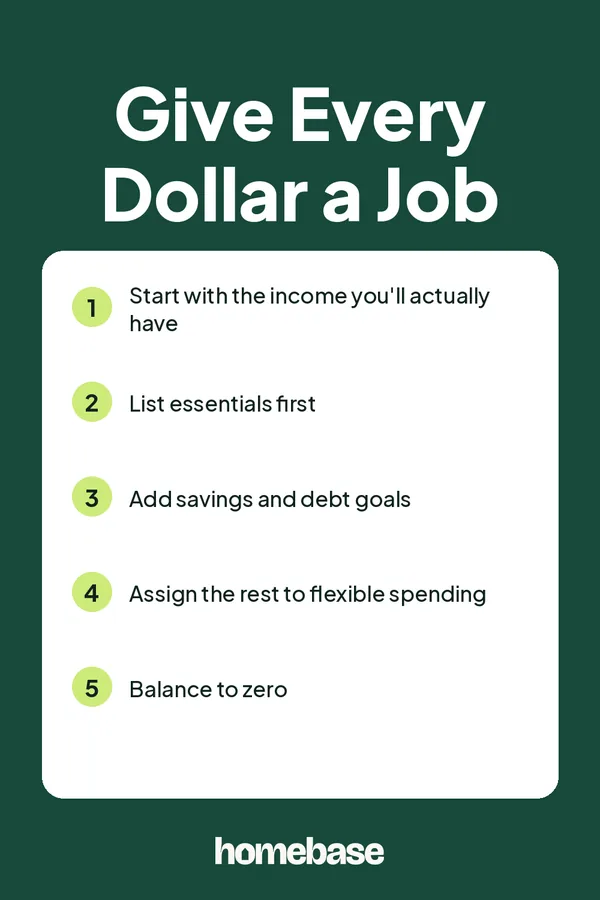
Not counting them in the budget. Sinking fund contributions are a budget line just like rent. If you use a zero-based budget, they get assigned before flexible spending.
Sinking funds for the holidays
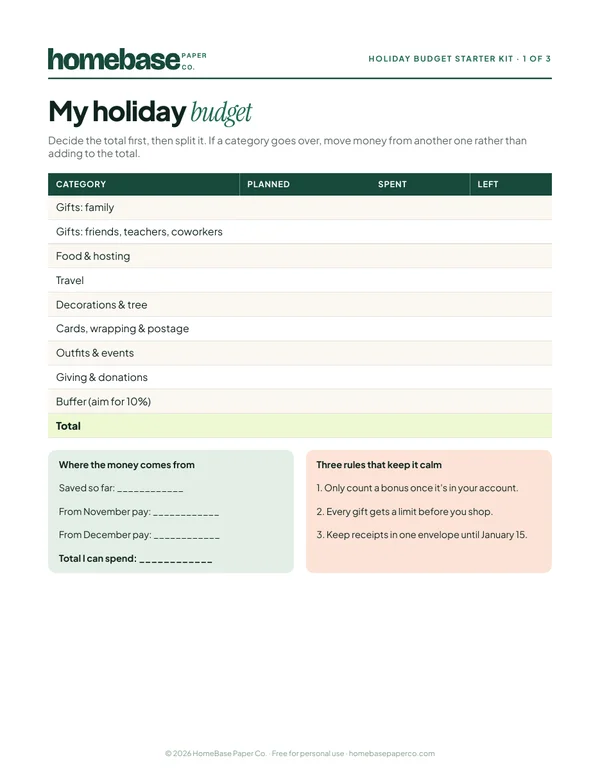
The most common sinking fund is for the holidays, and for good reason. Gifts, travel, food, decorations and hosting can add up to one of the most expensive months of the year. If you start a holiday fund in January, December becomes a lot calmer. Our holiday budget guide walks through how to set the total and split it across categories.
Frequently asked questions
How many sinking funds should I have? Most households do well with five to ten. Start with the expenses that have caused the most stress in the past year and add more once those are funded.
Should sinking funds earn interest? It's nice if they do, but access and safety matter more than return for money you'll spend within a year or two. An insured savings account that you can transfer from quickly is a reasonable home for most sinking funds.
What if I can't afford all the monthly amounts? Fund the nearest deadlines first. A partially funded sinking fund is still better than none, because it shrinks the amount you'll need to cover from your monthly budget when the bill arrives.
Do sinking funds replace an emergency fund? No. Keep both. Sinking funds cover the expected; the emergency fund covers the unexpected.
Quick-start checklist
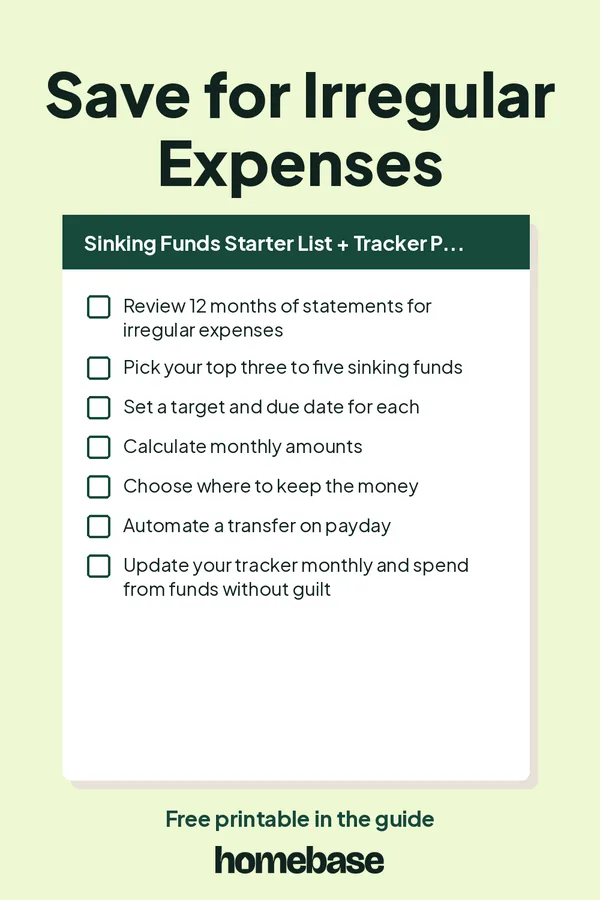
- Review 12 months of statements for irregular expenses
- Pick your top three to five sinking funds
- Set a target and due date for each
- Calculate monthly amounts
- Choose where to keep the money
- Automate a transfer on payday
- Update your tracker monthly and spend from funds without guilt
This article is general education, not personalized financial advice.
From our shop
Tools from our shop that go with this guide
Spreadsheets
Sinking Funds Tracker
It does the math: how much to set aside each month to hit every goal on time.
 Starter pick
Printables
100 Envelope Savings Challenge
Classic, half and 52-week challenges to print, plus a spreadsheet that tracks every envelope and tells you how much to save each week.
 Save 57%
Bundles
Ultimate Budget Bundle
All 6 spreadsheets + both printable planners - for less than half the price of buying them separately.
Free download
The Holiday Budget Starter Kit
A one-page holiday budget, a gift list with a spending limit for every person, and a 6-week countdown so December stays calm and paid for.
Free, no sign-up needed.
Save this guide for later