A vehicle maintenance log book is a written record of every oil change, repair, tire rotation and fill-up for one car. It takes about a minute per entry, and it pays off three ways: you never guess when service is due, warranty claims are easier to back up, and buyers trust a car that comes with a complete history.
This page covers what to record and how to keep the habit going. For the schedule itself (which service at which mileage), see our car maintenance schedule guide.
What a good log book tracks
| Section | What goes in it | Why it matters |
|---|---|---|
| Vehicle info | VIN, plate, insurance, roadside assistance, mechanic's number | Everything you need at the roadside or the shop |
| Parts and specs | Oil type, tire size and PSI, filter and wiper sizes | No more guessing at the parts counter |
| Oil changes | Date, mileage, oil used, next due | The most frequent service |
| Service and repairs | Date, mileage, work done, shop, cost | Warranty proof and resale history |
| Tires | Rotations, replacements, tread notes | Tire warranties often need rotation records |
| Fuel and MPG | Gallons, cost, miles driven | A sudden MPG drop can flag a problem early |
| Trip mileage | Start and end odometer, purpose | Useful for business, charity or medical mileage |
| Renewals | Registration, inspection, insurance dates | Avoid late fees and lapses |
A sample service log
| Date | Mileage | Work done | Shop | Cost |
|---|---|---|---|---|
| Jan 14 | 41,280 | Oil and filter, tire rotation | Main St. Auto | $89 |
| Mar 30 | 44,900 | Front brake pads | Main St. Auto | $265 |
| Jun 2 | 46,150 | Oil and filter, cabin air filter | Quick Lube | $96 |
| Aug 19 | 48,700 | New battery (3-year warranty) | Parts store | $189 |
Notice the last line: writing the warranty length next to the part means you'll know to claim it if the battery fails early.
Our vehicle logs
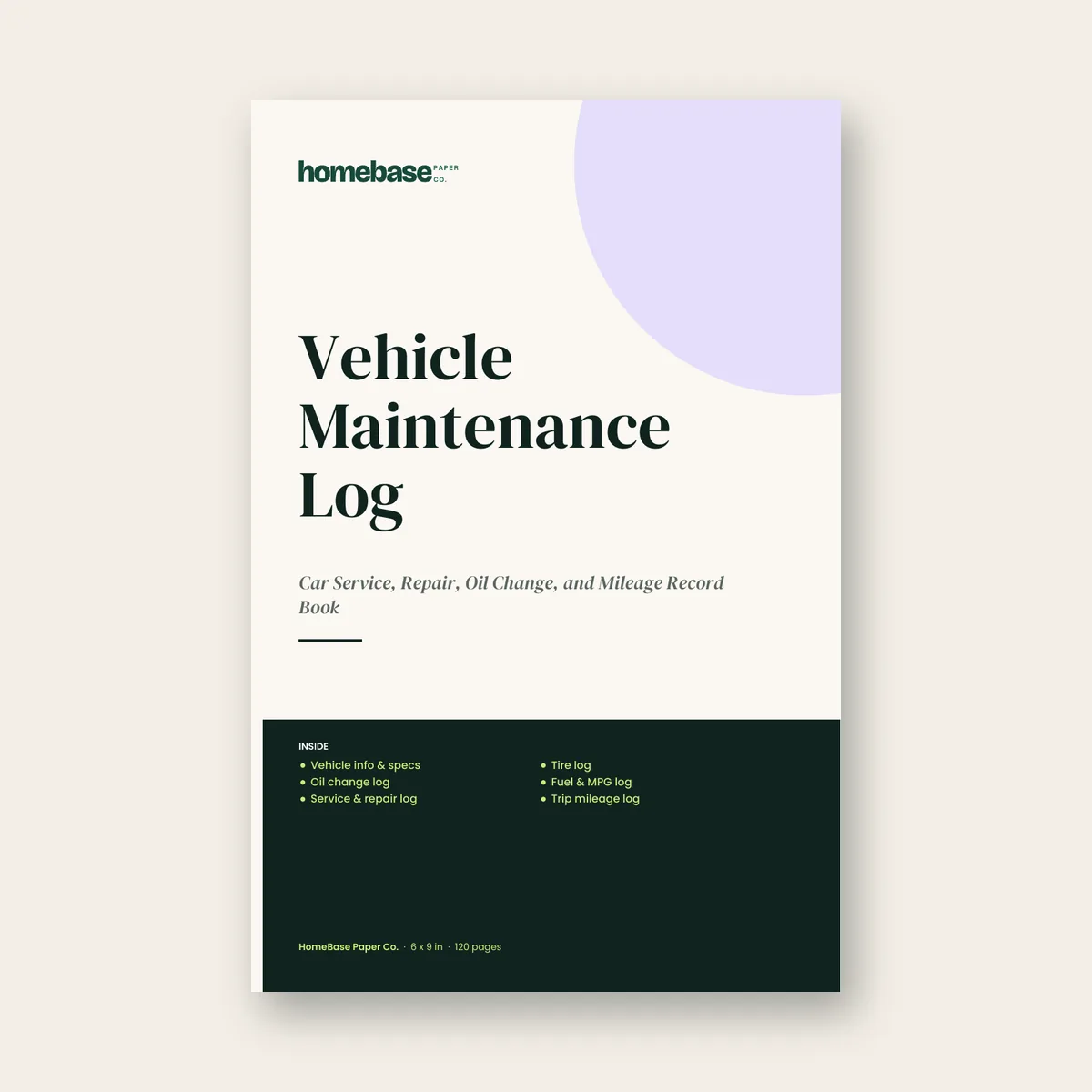
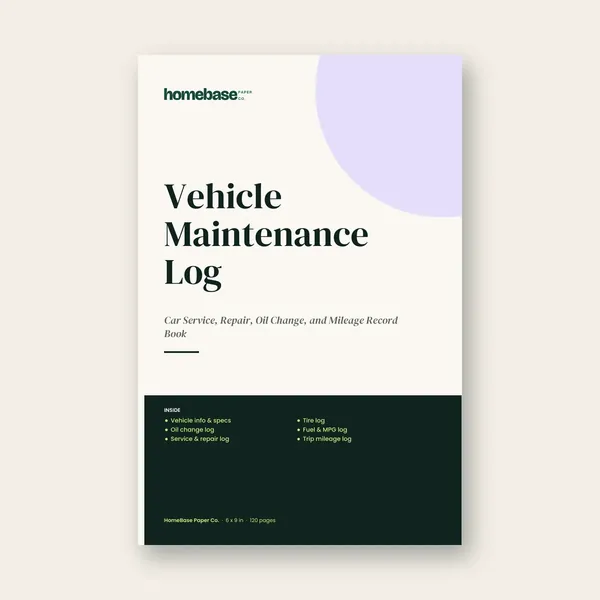
The Vehicle Maintenance Log paperback ($8.99) is a 6 x 9 inch, 120-page book that fits in a glove box. Inside: vehicle information, maintenance reminders and parts specs, 12 pages of oil change logs, 56 pages of service and repair records, 6 tire pages, 20 fuel and MPG pages, 10 trip mileage pages, plus a renewals page and a fill-in accident report. It's printed and shipped by Amazon.
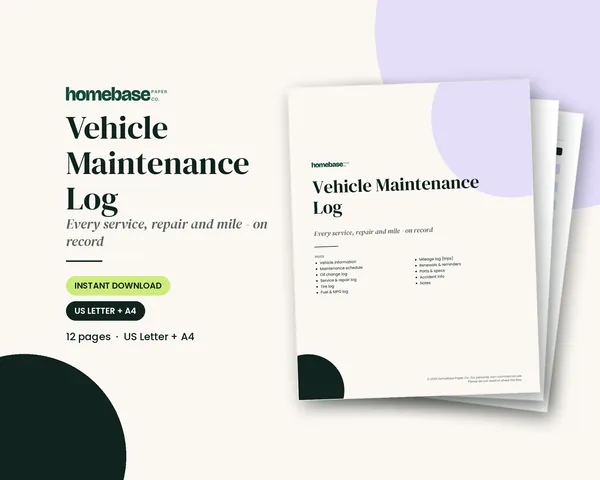
Prefer to print your own, or tracking more than one car? The Vehicle Maintenance Log printable ($3.99) is a 12-page PDF in US Letter and A4 with the same sections, including a maintenance schedule, renewals and reminders, and accident information. Print a fresh set for each vehicle.
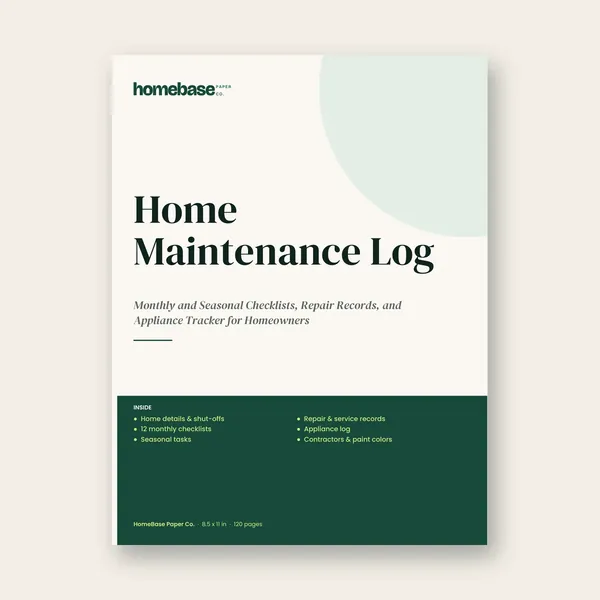
Keeping records for the house as well? The Home Maintenance Log paperback does the same job for furnace filters, gutters and appliances.
How to start a log for a car you already own
- Fill in the vehicle page from your registration, insurance card and the sticker inside the driver's door (tire size and pressure).
- Find your past records. Many shops can print your service history, and dealer service departments usually keep records by VIN.
- Add a starting line: today's date, current mileage, "log started," and when your next oil change is due.
- Keep the book in the glove box with a pen clipped to it, so you can log service before you leave the shop.
- Staple or tape receipts to the page, or note where they're filed.
Habits that keep it useful
- Log at the counter. Write the entry while you're paying; it never happens later.
- Record mileage every time, not just the date. Most service intervals are mileage-based.
- Track fuel once a month even if you don't track every fill-up. A trend is enough to spot trouble.
- Note what the mechanic recommended but you postponed, so it isn't forgotten.
- Review renewals in January and put the dates on the family calendar.
Selling the car? The log is a selling point
A complete, dated service history answers the first question every buyer asks: "Has it been maintained?" Hand over the log book with the car, or make copies of the pages if you want to keep the original. It shows regular oil changes, which repairs were done and when, and that the warranty items were handled. Buyers notice that, and a car with records is simply easier to sell than one without.
The log also makes it easier for you to decide when to sell: if the repair column starts growing quickly, it's visible on paper.
Frequently asked questions
What should I record in a vehicle maintenance log?
Record the date, mileage, the work done, who did it and the cost for every service. Add oil changes, tire rotations and replacements, fuel and MPG, trip mileage if you deduct it, and renewal dates for registration, inspection and insurance. Keep receipts with the log or note where they're filed.
Does a maintenance log help with warranty claims?
It helps you document that required maintenance was done on time, which some warranty claims ask for. Keep receipts as well, since they're the strongest proof. Check your warranty terms for the exact records required, as they vary by manufacturer and by part.
Is the paperback or the printable better?
The 6 x 9 inch paperback is bound, durable and fits a glove box, which suits one car kept for years. The printable PDF costs less and lets you print a separate set for each vehicle in the family. Both include oil change, service, tire, fuel and renewal pages.
How long should I keep car maintenance records?
Keep them for as long as you own the car, and pass them to the next owner when you sell it. A complete history supports warranty questions while you own it and reassures buyers later. Mileage logs for tax purposes may need to be kept longer, so check current IRS guidance.
Free download
The Holiday Budget Starter Kit
A one-page holiday budget, a gift list with a spending limit for every person, and a 6-week countdown so December stays calm and paid for.
Free, no sign-up needed.