
A caregiver daily log is a page per day where whoever is providing care writes down meals and fluids, medications given, mood, activity and anything unusual, with the time and their initials. When several family members, aides or neighbors share care, it's the one place everyone checks before and after a shift.
Here's what to record, a sample entry, and the logs we make.
Why a daily log matters
- Medications aren't doubled or missed. The next person can see exactly what was given and when.
- Changes become visible. A slow decline in appetite or a new pattern of confusion is easier to notice on paper than in memory.
- Doctor appointments go better. You can show what actually happened over the past two weeks.
- Family members stay informed without a dozen phone calls.
What to record each day
| Section | What to write |
|---|---|
| Time | For each entry, not just the date |
| Meals and fluids | What and roughly how much was eaten and drunk |
| Medications given | Name, dose, time, initials, copied exactly from the label |
| Mood and alertness | Calm, anxious, confused, sleepy, cheerful |
| Activity | Walks, therapy exercises, visitors |
| Bathroom and skin | Anything the care team asked you to watch |
| Sleep | Naps and night sleep |
| Notes and concerns | Falls, new symptoms, questions for the doctor |
| Handoff note | What the next caregiver needs to know |
Write medications exactly as they appear on the prescription label, and only record what you actually gave. If something seems wrong, call the pharmacist or doctor; a log is a record, not medical advice.
A sample entry
| Time | Entry | Initials |
|---|---|---|
| 8:00 a.m. | Breakfast: half a bowl of oatmeal, coffee, water. Morning meds given as listed. | RS |
| 10:30 a.m. | Walked to the mailbox with walker. In good spirits. | RS |
| 12:30 p.m. | Lunch: soup and crackers, ate most. Glass of juice. | RS |
| 2:00 p.m. | Napped about an hour. | MK |
| 4:15 p.m. | Seemed confused about the day; settled after tea. Note for Dr. visit. | MK |
| 6:00 p.m. | Dinner: chicken and rice, small portion. Evening meds given. | MK |
| Handoff | Appetite lower than usual for 3 days. Pharmacy refill due Friday. | MK |
Sharing care across a family
When siblings, a spouse and paid aides all help, a schedule and a single log prevent most conflicts:
- Make a weekly care schedule with names in each time slot, and post it on the fridge.
- Keep the log in one fixed spot, such as the kitchen counter, with a pen attached.
- Read the last handoff note before starting each shift.
- Use initials on every entry, so questions go to the right person.
- Photograph the week's pages on Sunday and share them in a family group chat, so those far away stay informed.
Our caregiver logs
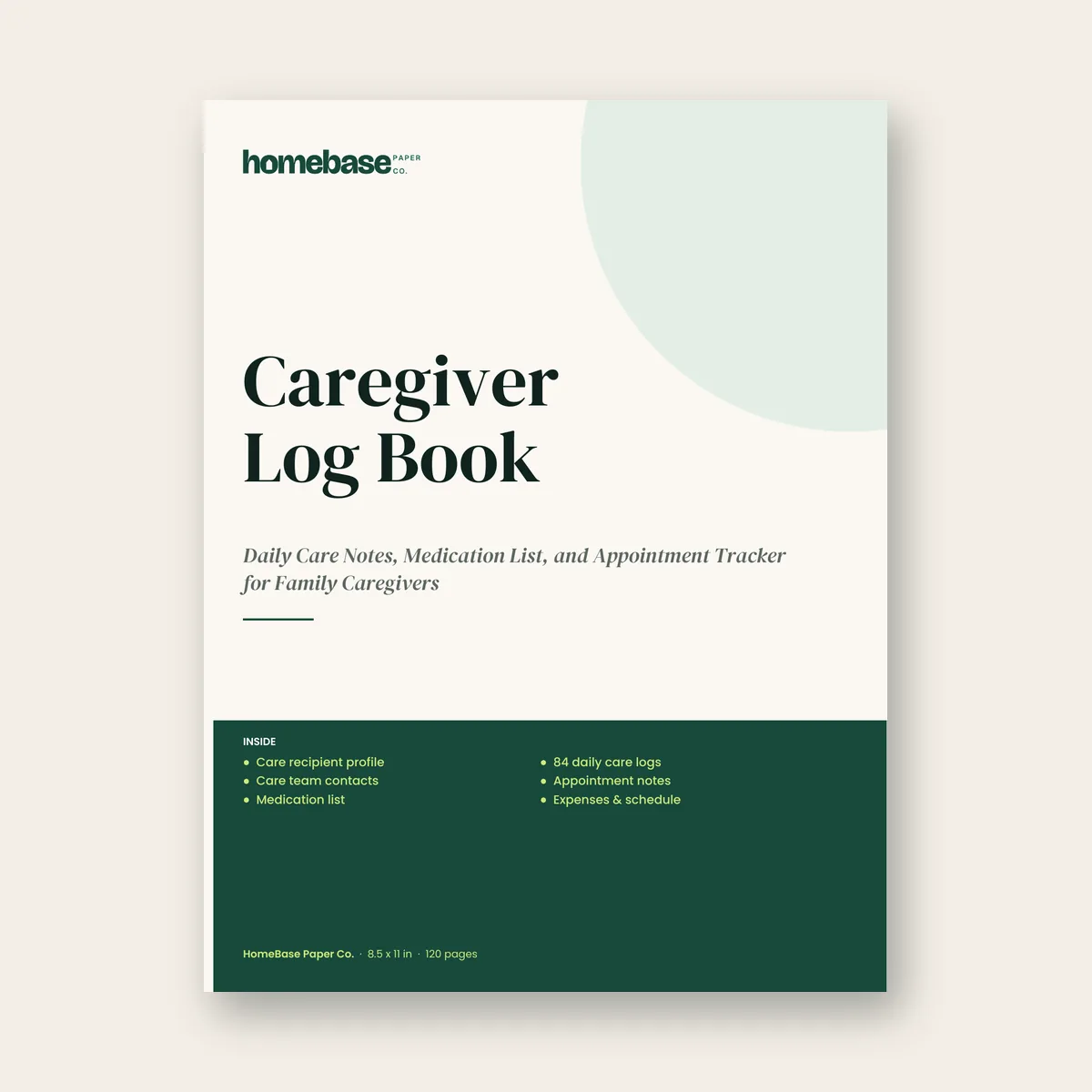
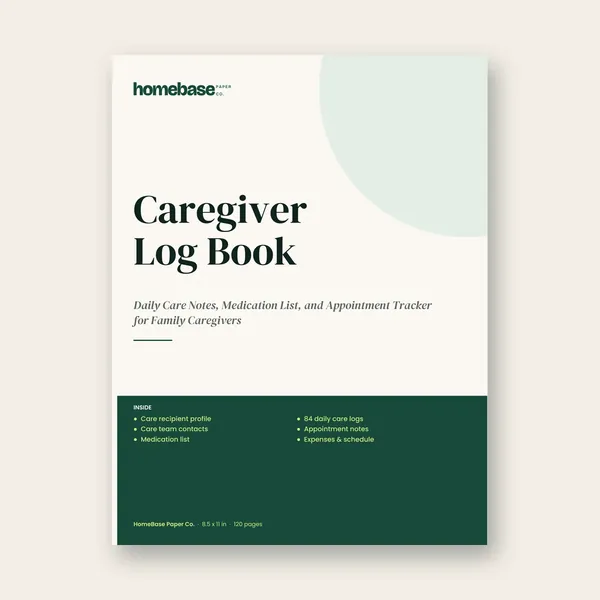
The Caregiver Log Book (paperback, $10.99) is a large 8.5 x 11 inch, 120-page book with a care recipient profile, care team contacts (doctors, pharmacy, agency, family and neighbors), a medication list copied from prescription labels, 84 daily care log pages with time, meals and fluids, medications given, mood, notes, initials and handoff notes, plus appointment notes, questions for the doctor, a care expense log and a family care schedule. It's printed and shipped by Amazon.
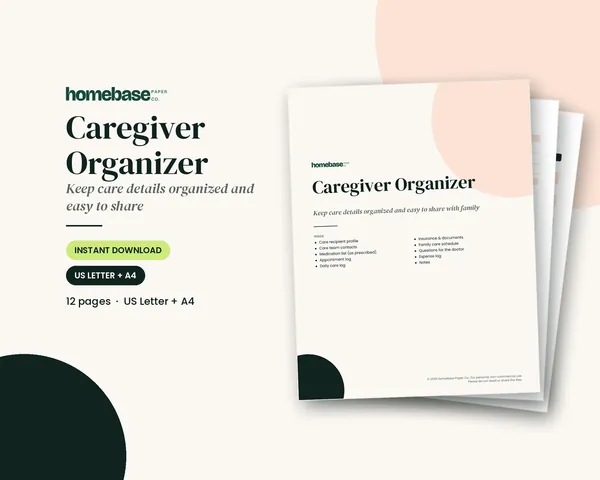
The Caregiver Organizer ($6.99) is the printable version: a 12-page PDF in US Letter and A4 with the care recipient profile, care team contacts, medication list, appointment log, daily care log, insurance and documents, family care schedule, questions for the doctor and a care expense log. Print as many daily pages as you need.
Looking after a parent's affairs as well as their care? The Family Peace of Mind Bundle ($17.99) adds the If Something Happens to Me Binder, Pet Health Records and Password & Accounts Log to the Caregiver Organizer.
Bring the log to appointments
Before each doctor visit, skim the past two weeks and jot two or three questions on the questions page. Bring the medication list so the doctor can check it against their records. Afterward, write down what changed, such as a new dose, a stopped medication or a follow-up date, and update the medication list the same day. Tell the rest of the care team about the change in the handoff note.
Caring for the caregiver
Logging also shows you how much you're doing. If the schedule has the same name in every slot, it's time to ask for help: from family, from a local agency on aging, or from respite care. A shared log makes it easier for someone new to step in, because everything they need to know is already written down.
Frequently asked questions
What should a caregiver write in a daily log?
Record the time of each entry, meals and fluids, medications given with dose and initials, mood and alertness, activity, sleep and any new concerns, plus a handoff note for the next caregiver. Copy medication names exactly from the prescription label and only record what was actually given.
How do families share a caregiver log?
Keep one log in a fixed place in the home, post a weekly care schedule with names in each slot, and have everyone initial their entries and read the last handoff note before starting. Photographing the week's pages and sharing them keeps distant family members informed.
Is the Caregiver Log Book large print?
It's a large 8.5 x 11 inch paperback with generous writing space, which makes entries easy to read for everyone on the care team. It has 84 daily care log pages plus profile, contacts, medication list, appointments, questions, expenses and a family care schedule.
Can I print more daily care pages?
Yes. The Caregiver Organizer is a 12-page printable PDF in US Letter and A4, and you can print as many daily care log pages as you need for personal use. Keep them in a binder with the medication list and contacts at the front.
Free download
The Holiday Budget Starter Kit
A one-page holiday budget, a gift list with a spending limit for every person, and a 6-week countdown so December stays calm and paid for.
Free, no sign-up needed.